January 2 is when swim season quietly restarts. No celebrations, no hype—just early alarms, cold decks, and the reminder that winter swimming doesn’t ease you back in.
For swimmers, this week is always a little awkward. Time off was fun, but now the water feels foreign. Bodies are stiff, the pace feels off, and confidence hasn’t fully caught back up yet. Kids who were laughing a few days ago might suddenly seem quiet or frustrated, and that’s normal. For parents, this is usually where the instinct to motivate kicks in. We mean well, but January 2 isn’t really about hype. It’s about easing back into the rhythm without turning it into a bigger thing than it needs to be.
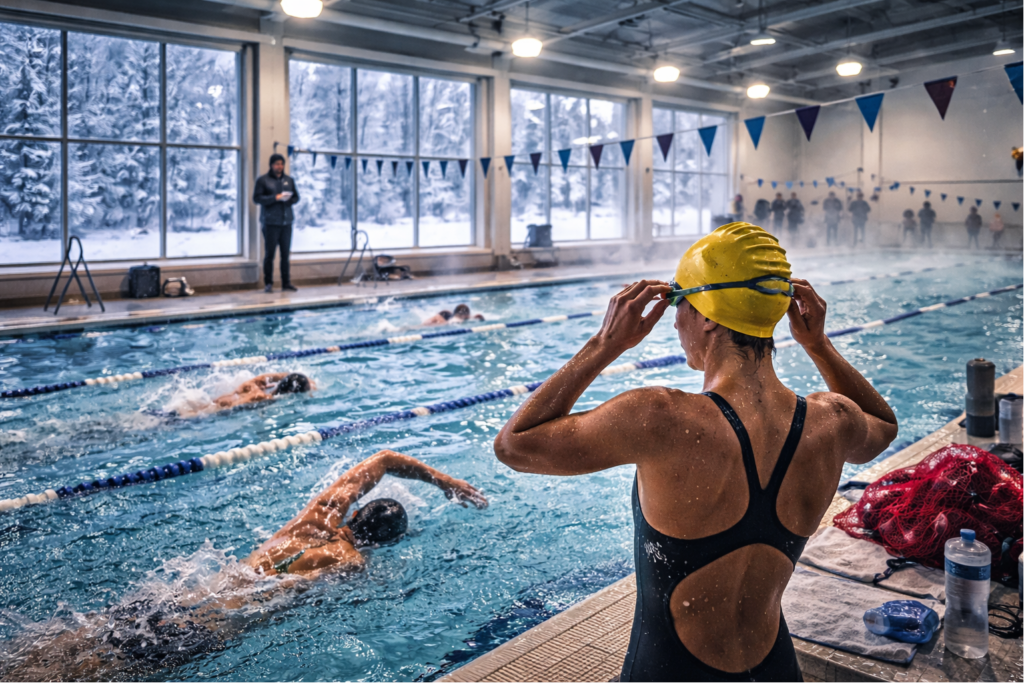
And let’s talk about the weather, because it matters. If you’re in a warm-weather state, January swimming probably means grabbing a hoodie. If you’re in the DC area right now, where it’s in the 20s, January 2 feels like a test of character. There’s something borderline comical about scraping ice off the windshield, driving to the pool in the dark, and then watching your kid willingly jump into water before sunrise. At some point you look around the parking lot and wonder if this still counts as a sport or if it’s just organized stubbornness.
What makes this week sneakily important is the calendar pressure that’s already there, even if no one is saying it out loud. In most LSCs, we’re suddenly counting days to last-chance meets and short-course championship season. High school swimming, in many areas, jumps back on in as little as four days. The overlap is real, and the ramp-up is fast. January 2 isn’t just getting back in the water—it’s the start of a stretch where things move quickly, whether swimmers feel ready or not.
A lot of the best swimmers in the world have talked about how this part of the season works. Michael Phelps once said, “If you want to be the best, you have to do things that other people aren’t willing to do.” January is where that shows up—not in dramatic ways, but in simply showing up consistently when the water doesn’t feel great, and nothing feels sharp yet.
Katie Ledecky has always framed improvement the same way, saying, “I just try to keep improving myself, not worrying about being better than someone else.” That mindset matters right now, especially when kids start doing the math in their heads—days until the next meet, weeks until championships, practices they think they “missed” over the break.
The next week is really about resetting routines. Sleep schedules shift back. School stress returns. Practices feel long again. This is where parents help more than they think—not by fixing things, but by keeping life normal. Same rides. Same dinners. Same reactions whether practice was great or rough. Swimmers tend to settle faster when everything around them feels steady.
This is also when comparison sneaks back in. December times get mentioned. Goals get talked about. Social media makes it look like someone else is already locked in. But as Ledecky has also said, “Success is finding what works for you and sticking with it.” January doesn’t need measuring sticks. It needs patience—and probably a few extra days to feel like swimming again.
What swimmers usually need most right now isn’t a reminder of what’s coming later in the season. They just need time to get comfortable again. January practices are about finding rhythm, rebuilding feel, and trusting the process. Or, as Phelps put it simply, “It’s not how you start. It’s how you finish.”
So if you’re on deck this week or sitting in the car with the heat blasting, know that just staying calm and consistent helps more than you think. January 2 isn’t about flipping a switch. It’s about easing back into the season—cold mornings, crowded calendars, and all.
The swimmers who get through this stretch supported, not rushed, are usually the ones who look a lot more confident when championship season rolls around. And it often starts with parents who understand that sometimes the best thing you can do is let the season restart at its own pace.